If you look up “marketing news” today, you’ll most likely find an entire list of articles discussing Artificial Intelligence – how it’s changing SEO, reshaping search behavior, and dissolving the analytics that many marketers considered to be key in determining success. Despite AI having completely reshaped many standard digital marketing tactics, it is merely the newest piece of a much larger framework that has been changing the industry over time.
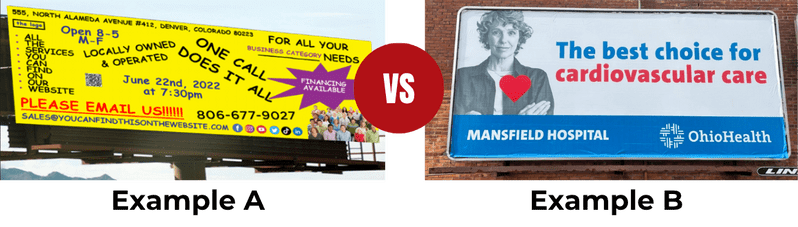
Objectively, modern-day marketing has become increasingly complex. Businesses and marketers are expected to understand and navigate SEO, AEO, webpage crawling, AI citations, algorithm updates, trend cycles, conversion tracking, engagement metrics, keywords, and more. If marketing is fundamentally the process of understanding people and delivering something of value to them, then today’s marketing landscape is beginning to resemble a conspiracy theory board riddled with red string. And if the system has become overly “engineered” to the point of obscurity, it raises an important question: has modern marketing become too complicated for its own good?
The Shift from People to Platforms
A common theory in marketing is that the most effective campaigns are often the ones consumers don’t immediately recognize as marketing. The goal was to create something entertaining, useful, informative, or emotionally resonant enough that consumers would willingly engage with it. The product or service would become associated with the experience, and when people connected with it, the brand naturally followed.
Today, many businesses find themselves marketing to something entirely different. Search engines, AI chatbots, recommendation algorithms, and web crawlers are fed information that may – or may not – eventually be presented to a potential customer. However, success often depends upon satisfying a growing list of technical requirements: authority scores, relevant keywords, question-and-answer formatting, schema markup, alt text, and countless other ranking factors. The result is often bland content that feels more focused on algorithmic approval than earning consumer attention.
At the same time, consumers are becoming increasingly vocal about ad fatigue. They’re either skipping ads, scrolling past sponsored content, or tuning out any promotional messaging as a whole. The introduction of AI has only added another layer of hesitation and skepticism, as consumers now become wary of perceiving fake content as genuine.
If consumers are already frustrated by increasingly complex and impersonal marketing tactics, should the solution really be to add even more layers of technology and automation to the mix? Or is it something else completely?
Doing More with Less
When marketing was at its peak, it was simple, direct, and prioritized the consumer. Now, the main focus is on the number of mediums used to hyper-target one individual, with no tactics involved to build trust. This is where consumers started to feel their privacy was being breached.
To remedy the amount of distrust being felt by consumers online, why not revert to an advertising medium that remains both simple and direct?
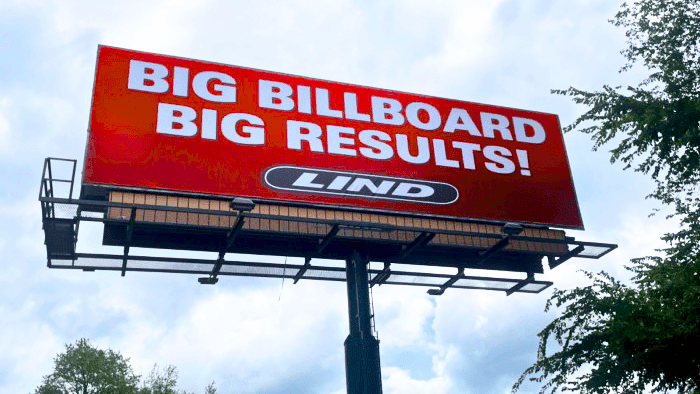
Billboards play a pivotal role in building brand awareness without invasive tracking, hyper-targeting, or complex optimization strategies – and that’s what makes them so effective in the modern marketing landscape. Not only do they offer a simplified and direct way to advertise to consumers, but they also allow for ample opportunity to make the ad specifically for consumer experience – not chatbots, search engine crawlers, or any form of optimization technology. Just effective ads being presented directly to a mass audience during their daily commute.
And despite their simplicity, billboards are known to be a strong contender in terms of effectiveness – boasting an impressive 86% ad recall rate and a 78% engagement rate among consumers (Out of Home Advertising Association of America)! Those numbers serve as a reminder that effective marketing doesn’t always require more complexity.
As businesses and marketers alike continue adapting to new technologies, platforms, and consumer behaviors, it’s worth remembering that the goal of marketing has never fundamentally changed. Consumers still want to discover businesses they can trust, products and services that solve problems, and brands that feel familiar. The methods may evolve, but the object remains the same: to connect with people. Billboards continue to excel at that simple objective, helping businesses stay top-of-mind through clear messaging and repeated exposure.
In conclusion, as marketing continues to become increasingly focused on systems, algorithms, and automation, the brands that stand out will be the ones that never lose sight of the people they’re trying to reach.
Ready To Advertise?